
Welcome to the Freedom Fund’s monthly bulletin designed to bring you new and compelling research from the global anti-slavery movement.
Revolving funds improve livelihoods among former bonded labours in Nepal
The Freedom Fund assesses changes in household income and economic activities among formerly bonded labourers in the Harawa-Charawa community in Nepal following a revolving-fund project involving 741 participants, most of whom were women. The study finds that nearly half of the respondents became fully self-employed and monthly household income increased by 39%. In addition, 90% of women participants were actively engaged in household economic activities, compared to just 41% before the revolving fund.
Intersections between disability and trafficking in Indonesia, the Philippines and Thailand
A La Trobe University-led study sheds light on the links between disabilities and the risk of exploitation, with a focus on Indonesia, the Philippines, and Thailand. Drawing on interviews with 78 stakeholders and 24 survivors across the three study countries, the findings reveal that people with disabilities in the region are more likely to experience poverty due to factors including medical expenses, gaps in social protection, barriers to accessing education and information, and limited opportunities for decent work including social norms to tolerate exploitative practices. In all three countries, women and girls with disabilities are found to be particularly vulnerable to sexual exploitation, while forced labour, forced begging and forced criminality, are identified as common forms of exploitation.
Household chores are detrimental to the well-being and development of children
The French Institute for Demographic Studies analyses household chores performed by children in 90 countries. The 2024 estimate of 79 million children aged five to eleven engaged in child labour, is based exclusively on economic work and reveals that children’s participation in household chores (with or without economic work) that cumulates to child labour is much more widespread, particularly among girls and in African countries. The child labour rate increases from 15% to 17% among children aged five to eleven with the inclusion of a 21-hours-per-week threshold for household chores, highlighting the importance of counting household work in the child labour definition.
Labour abuse is a structural feature of marine-based fisheries
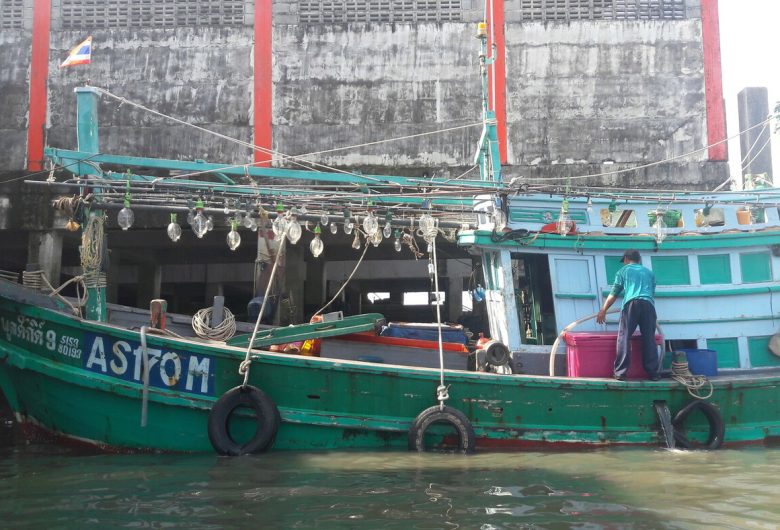
Dalhousie University researchers examine labour abuses in marine-based fisheries across different contexts. A scoping review of 51 studies finds a causal link between forced labour and illegal fishing, highlighting that declining catch per unit of effort and intense competition incentivise the maintenance of profit margins through wage theft, excessive working hours, and the disregard of occupational safety of workers.
Ethiopians with disabilities face high risks of being trafficked into forced begging
The Population Council explores the nature and patterns of forced begging among persons with disabilities in urban areas of Ethiopia. The study confirms prior anecdotal evidence that some children are deliberately harmed or made blind by traffickers, and describes long working hours, inhumane conditions, and physical and sexual violence as methods of control. Survivors described a variety of strategies to leave forced begging and a range of long-term outcomes and challenges. The authors include concrete recommendations for interventions including mechanisms to report suspected forced begging and expanded post-exit services for survivors.
Read on
The National Human Rights Commission of Nepal reports on the current trafficking in persons situation and evaluates Nepal’s anti-trafficking response.
UK BME Anti-slavery Network investigates the ways in which everyday workplace technologies can both enable access to employment and expose workers to exploitation.
Pancasila University analyses obstacles causing low restitution rates for trafficking survivors in Indonesia.
Freedom Fund news
Our Head of Programs in Africa, Ruth Kimani, writes about the millions of girls across Africa who enter domestic work hoping for a way to support their families and gain an education, only to find themselves trapped in abuse. Read Ruth’s article here.
Visit our Newsroom for more updates.
Research library
Visit our Slavery Research Library to access anti-slavery resources from across the globe.
Contact
Our team would love to hear from you. Email us at [email protected].
The Slavery Research Bulletin is produced monthly by the Freedom Fund, a global fund with the sole aim of helping end modern slavery.
Research being featured in this bulletin does not equal endorsement by the Freedom Fund.
Join the Slavery Research Bulletin mailing list.
Photo credit: Mãe D’Água Filmes/The Freedom Fund