
Welcome to the Freedom Fund’s monthly bulletin designed to bring you new and compelling research from the global anti-slavery movement.
Future trends of modern slavery and human trafficking risks
The UK Independent Anti-Slavery Commissioner presents modern slavery and human trafficking threats in the UK over the next ten years. Drawing on insights from over 50 stakeholders and individuals with lived experience, the analysis identifies 21 drivers and forms of exploitation shaped by five conditions including global conflicts, climate pressures driving large-scale displacement, institutional capacity for early detection and data collection, online recruitment and the use of digital payment systems. The report highlights organised crime networks protected by state-aligned actors, coercive surrogacy and egg harvesting, organ removal, forced criminality and the exploitation of individuals with cognitive vulnerabilities as emerging forms of exploitation.
The prevalence of forced labour in the distant water fishing operations
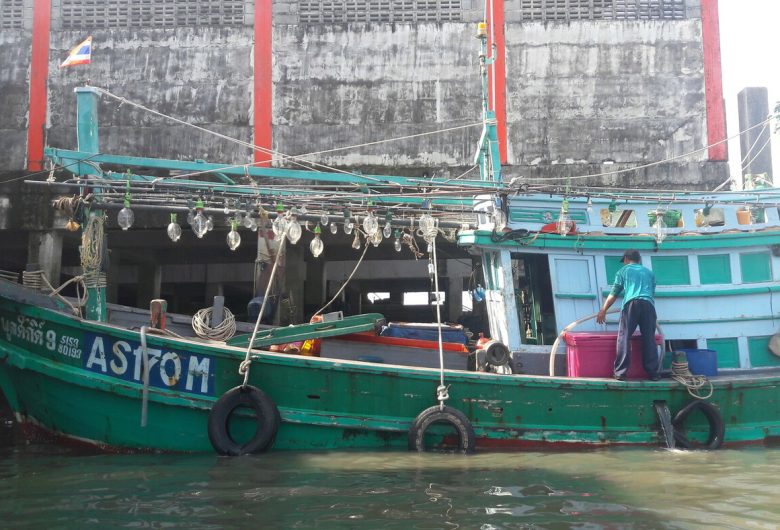
The U.S. Department of Labor investigates forced labour in the distant water fishing supply chain employing Indonesian migrant fishers on vessels flying Taiwanese, Chinese and other flags. Seventy-seven percent of the fishers interviewed reported experiencing forced labour conditions, specifically involuntary work and abuse. Forty-nine percent of fishers reported incurring recruitment costs and debt to their employer or recruiter, while 13% reported a mismatch between their job conditions and contract terms. All workers on vessels flagged to China experienced forced labour, compared to 87% of workers on vessels flagged to Taiwan and 50% of workers on vessels flagged to other countries.
Predictors of harm or benefit for child domestic workers in Liberia
The London School of Hygiene & Tropical Medicine leads an examination of factors that predict harms and benefits of child domestic work in Liberia. Forty-four percent of child domestic workers reported that their lives had improved since entering domestic work, while 9% said their lives had worsened and 46% reported no change. Positive outcomes were associated with school attendance and freedom from violence, whereas negative outcomes were linked to lack of access to education, restricted freedom of movement, and poor nutrition. Access to education was identified as a key factor in determining whether child domestic work results in beneficial or harmful outcomes.
Forced labour in complex supply networks
The study led by the University of Cambridge examines forced labour risks in the automotive, chocolate and fashion and textiles industries by mapping global supply chain networks using predictive machine learning algorithms. The analysis finds that over 70% of components across all three sectors are sourced through supply chains that include firms linked to forced labour. While most multinational corporations are headquartered in Europe, the United States and China, their upstream suppliers are concentrated in Asia and South America. The study also finds that higher-revenue suppliers in the fashion and textiles industry are more likely to be associated with forced labour, while the opposite pattern is observed in the chocolate and automotive sectors.
Heterogeneity in child sexual exploitation and abuse perpetration mechanisms
University of New South Wales leads a systematic review of self-reported child sexual exploitation and abuse perpetration among adults. An estimated 4.5% of adults reported contact sexual offending against children, while 6.5% reported noncontact offending. Among men, noncontact offending was approximately twice as prevalent as contact offending. The findings highlight the need for prevention efforts addressing both online and offline abuse, the need for harmonised measurement, and the importance of sex-disaggregated reporting.
Read on
University of Bayreuth and Université Catholique de Bukavu examine the factors driving girls’ participation in artisanal cobalt mining.
Re:Structure Lab documents the impact of Kafala System on issues of labour exploitation and forced labour.
The U.S. Department of Labor’s Bureau of International Labor Affairs offers free self-assessment tools to help businesses strengthen their global supply chains
Freedom Fund news
Join Freedom Fund CEO Nick Grono for a Devex Pro Funding Briefing exploring how the Freedom Fund identifies slavery hotspots, why trust-based funding is critical for frontline and survivor-led organisations and how its nine-year drawdown plan is shaping the organisation’s future. Find out more here.
Visit our Newsroom for more updates.
Research library
Visit our Slavery Research Library to access anti-slavery resources from across the globe.
Contact
Our team would love to hear from you. Email us at [email protected].
The Slavery Research Bulletin is produced monthly by the Freedom Fund, a global fund with the sole aim of helping end modern slavery.
Research being featured in this bulletin does not equal endorsement by the Freedom Fund.
Join the Slavery Research Bulletin mailing list.
Photo credit: Eva Jew/The Freedom Fund