
Welcome to the Freedom Fund’s monthly bulletin designed to bring you new and compelling research from the global anti-slavery movement.
Human trafficking and cyber scam hubs in Asia-Pacific region
The Asia/Pacific Group on Money Laundering reports on the nature of cyber scam hubs (CSHs) and human trafficking in the Asia-Pacific region. Drawing on open-source information and insights from experts, including private and public sector actors, the report reveals that CSHs are located in border areas and special economic zones in Cambodia, Lao PDR, Myanmar and Thailand, where there is low regulatory oversight, limited law enforcement presence and internet access. Proceeds from CSHs are moved across borders through the use of shell companies, making anti-money laundering regulation difficult. CSHs operate through a low-cost workforce trafficked via false job advertisements, while corruption enables CSHs to shift easily and quickly to other jurisdictions and nearby districts upon detection.
Employer Pays Principle reduces debt bondage in the Malaysian medical gloves sector
The Policy and Evidence Centre on Human Rights evaluates responsible recruitment measures in the Malaysian medical gloves sector. Building on factory worker surveys from 2021 and 2026, the study finds that since the Employer Pays Principle (EPP), there is a decline in the proportion of workers who paid recruitment fees (from 92% to 3%), relied on recruitment loans (from 43% to 3%), and felt unable to leave their employment (from 47% to 14%), reflecting a reduction in debt bondage. However, the study also identifies an increase in workplace threats and intimidation (from 7% to 20%), a significant decline in workers’ trust in grievance mechanisms (from 61% to 18%), and uneven implementation of the EPP across the sector, including disparate improvements associated with the nationality of the workers.
Approaches for worker-driven co-research in the context of global supply chains
Re:Structure Lab offers insights into co-research approaches that enable workers, specifically workers and unionists from Guatemala, Honduras and Mexico, to engage with broader economic dynamics. In Guatemala and Honduras, worker-led surveys comparing unionised and non-unionised workers in the banana and garment export sectors strengthened workers’ understanding of the impact of unionisation. In Mexico, workers analysed corporate structures and financial data alongside their knowledge of production processes and plant-level conditions, enabling them to challenge employers’ narratives about economic constraints and develop stronger organising strategies. The study recommends that all co-research approaches begin by consulting workers about the issues they wish to address.
Trends and drivers of child labour in Uganda
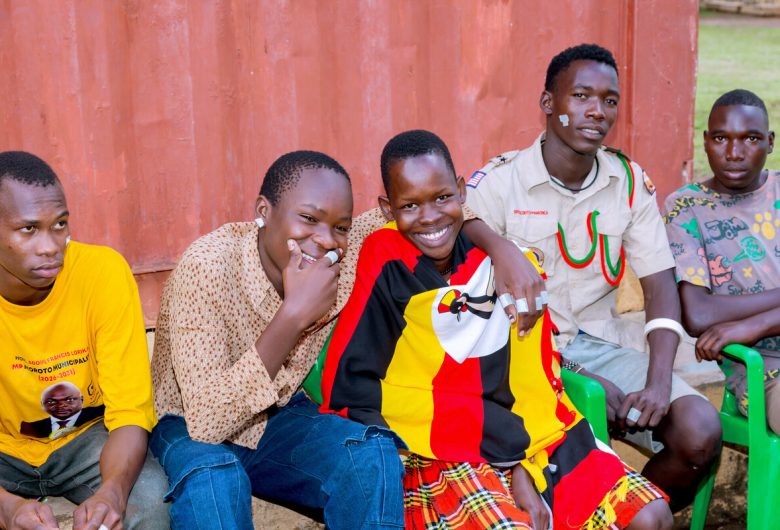
The International Labour Organization examines the drivers of child labour in Uganda. Drawing on data from the Uganda National Panel Survey from 2012 to 2021, the study finds that child labour in Uganda declined from 22.6% in 2012 to 19.1% in 2021, with the reduction being most significant among children aged 12 to 17 years. Child labour rates were consistently higher among boys than girls, though girls’ most time-consuming tasks such as domestic chores or fetching water fall outside the applied definition of child labour. Children from rural households and households affected by shocks, such as illness, job loss or crop failure, were more likely to be engaged in child labour, highlighting the need to promote decent work for adults, strengthen social protection and address barriers to quality education, particularly in rural communities and sectors where child labour was most prevalent.
ASEAN remains focused on state security in addressing human trafficking of migrant workers
Researchers from Universitas Abdurab evaluate the effectiveness of ASEAN in using regional mechanisms to address human trafficking risks. Using a qualitative case study from the Myanmar-Thailand corridor, the authors find that despite advancements in implementing region-specific tools such as the ASEAN Convention Against Trafficking in Persons, implementation is hampered by the dominance of the non-intervention principle, weak regional coordination and differences in the capacities of member states. There was also a noteworthy prioritisation of state security rather than individual survivor protection.
Read on
The Victims of Communism Memorial Foundation argues that the ILO’s conceptualisation of state-imposed forced labour conflates coercive mechanisms with state purposes.
The University of Utah leads the examination of service providers’ perspectives on the role, impact and challenges of harm reduction in supporting survivors of sex trafficking who use substances.
University Of Widya Mataram analyses the juridical implications of forced marriage as a form of violence against women and assess the challenges of applying the law in Indonesia.
Freedom Fund news
The Freedom Fund announces the appointment of Havovi Wadia as its next Chief Executive Officer. Read the full statement.
Visit our Newsroom for more updates.
Research library
Visit our Slavery Research Library to access anti-slavery resources from across the globe.
Contact
Our team would love to hear from you. Email us at [email protected].
The Slavery Research Bulletin is produced monthly by the Freedom Fund, a global fund with the sole aim of helping end modern slavery.
Research being featured in this bulletin does not equal endorsement by the Freedom Fund.
Join the Slavery Research Bulletin mailing list.
Photo credit: Filmatory Nepal/The Freedom Fund