
Welcome to the Freedom Fund’s monthly bulletin designed to bring you new and compelling research from the global anti-slavery movement.
State-run overseas employment program concerns Ethiopian migrant women
The Danish Institute of International Studies leads a study of migration systems and actors in Ethiopia. Drawing on interviews with 26 returned migrant women and stakeholders, the study indicates that the designation of certain places as “hotspots” creates opportunities for government and migration-industry actors to expand migration control and humanitarian initiatives. A new digitalised labour market and migration system that links employees and foreign employers may be improving the security of the process for migrants. However, it excludes different groups based on regional, ethnic or political affiliation. The study highlights the reliance of rehabilitation and reintegration of trafficking survivors on non-government actors and limited opportunities to incorporate migrants’ diverse experiences into government-led programs.
Decent work and quality of life in the fishing sector
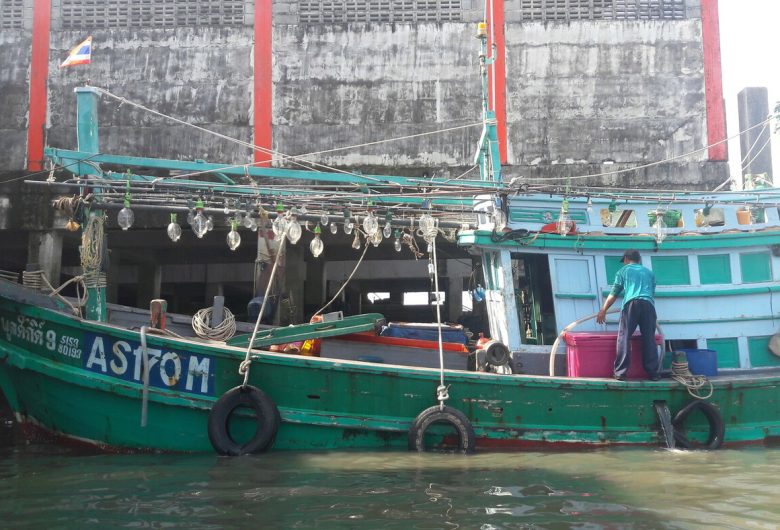
The University of the Algarve reviews evidence on decent work (DW) and quality of life (QoL) in artisanal and small-scale fisheries. The extant literature is geographically concentrated in South America and Asia. DW is examined through the lenses of safety, occupational risks and informality, whereas worker participation, autonomy, legal protection, fair remuneration and social dialogue are overlooked. The study of QoL is dominated by workers’ perspectives on job satisfaction, physical and mental health, and economic conditions, while less attention is paid to social support, community dimensions and environmental impacts. The study recommends integrated frameworks that examine structural, occupational and individual factors shaping DW and QoL.
Forced labour exposure in automative, chocolate, fashion and textiles firms
The University of Cambridge and the Alan Turing Institute present global data on forced labour exposure among 400 automotive, 950 chocolate and 5,040 fashion and textiles multinational companies (MNCs), or tier-one firms, most of which are located in Europe, the US and China. Although a low number of MNCs across the three industries directly use forced labour, it is deeply embedded in their global supply networks, affecting 71–72% of firms. Forced labour typically occurs in the third and fourth tiers of their supply networks, while MNCs perform due diligence only on their direct suppliers or tier-two firms. The authors recommend that MNCs investigate the third- and fourth-tier suppliers, and call for the establishment of a central authority to govern data and alert systems.
Economic benefits of reducing child marriage and adolescent pregnancy in Southeast Asia
The Burnet Institute leads a return-on-investment analysis of interventions to prevent adolescent pregnancy and child marriage among girls aged 15 to 19 years in Cambodia, Indonesia, the Philippines, Lao PDR and Malaysia. The authors estimate that US $1.4 billion in investment in preventative interventions from 2024 to 2030 could avert 2.4 million unintended pregnancies and 2.1 million child marriages, while an additional US $5.0 billion investment in community dialogue in Cambodia, Indonesia and Malaysia; in-school comprehensive sexuality education in Lao PDR; and educational support in the Philippines could avert an additional 1.3 million unintended pregnancies and 1.1 million child marriages by 2030 and generate US$13.2 billion in economic benefits by 2025. The authors further conclude that each dollar invested under this structure would return nearly ten dollars into the respective national economies.
Widespread conflict-linked exploitation in Sudan
The University of Hull assesses conflict-linked exploitation in the Sudanese conflicts. Drawing on a review of secondary sources and media reports, the study suggests that exploitation was widespread before and worsened with the outbreak of the 2023 conflict. The absence of effective deterrence resulting from the collapse of formal governance and institutional structures provides opportunities for offenders to commit various crimes. The study argues that although community resilience and community-led networks play a role in mitigating exploitation, the mobilisation of humanitarian support is crucial to ensuring greater protection for the civilian population.
Read on
The Peterson Institute for International Economics publishes a note on the new US Section 301 Tariffs on forced labour.
The Lebanese American University contends that Lebanon’s Kafala system is a racialised system of governance of migrant domestic workers. Interested readers may contact the author to request a copy of the article.
ILO examines trade union cooperation and collaboration across Africa and the factors that enable or constrain them.
Freedom Fund news
The Freedom Fund’s partner in Brazil, Coletivo Mulher Vida, has been recognised by the Pernambuco government as a strategic partner in combating trafficking and exploitation of children and adolescents. Find out more about Coletivo Mulher Vida here.
Visit our Newsroom for more updates.
Research library
Visit our Slavery Research Library to access anti-slavery resources from across the globe.
Contact
Our team would love to hear from you. Email us at [email protected].
The Slavery Research Bulletin is produced monthly by the Freedom Fund, a global fund with the sole aim of helping end modern slavery.
Research being featured in this bulletin does not equal endorsement by the Freedom Fund.
Join the Slavery Research Bulletin mailing list.
Photo credit: Audrey Guichon