
Evaluation results of a pilot program tackling exploitative child domestic work in Nigeria
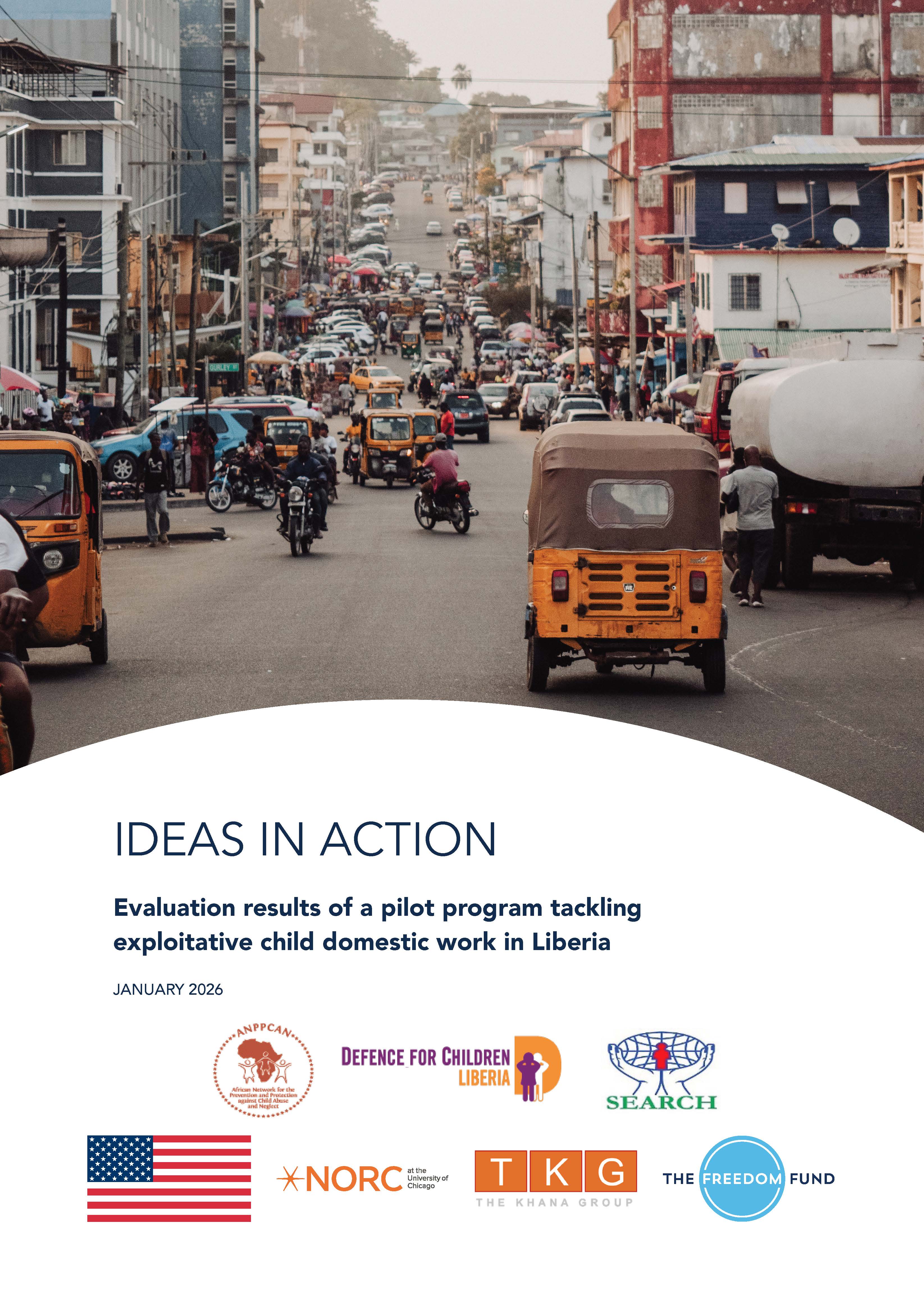
The exploitation of child domestic workers (CDWs) is a systemic issue reinforced by ingrained social practices, a lack of understanding regarding children’s rights, and the inconsistent application of legal safeguards. To address this, the Tackling Exploitative Child Domestic Work in West Africa initiative launched an evaluation to determine the effectiveness of community-centred strategies in reducing the exploitation of CDWs in Liberia. Led by NORC at the University of Chicago in partnership with the Freedom Fund and The Khana Group, the evaluation assessed three intervention prototypes implemented by grassroots civil society organisations between November 2023 and October 2024. The findings draw on qualitative research, including key informant interviews and focus group discussions with 29 child domestic workers, government stakeholders, law enforcement officials, community members, religious leaders and implementing partner staff.
Findings from the evaluation revealed that:
- Implementing partners built relationships with law enforcement and child protection authorities, many of whom received training on monitoring, identifying and responding to exploitative child domestic work.
- Awareness-raising helped shift knowledge and attitudes among employers/caregivers, local leaders and community members. Community dialogues, media campaigns and the mobilisation of trained change agents and Child Welfare Committee members drove these gains.
- Existing social infrastructure, such as places of worship, schools and marketplaces, was reported as highly effective in fostering trust and encouraging participation. Stakeholder interviews and partner reports highlighted early signs of behavioural change, increased willingness to report cases and stronger local engagement with CDW issues.
- Stakeholders reported growing recognition of CDW exploitation as a child protection concern addressed under existing legal frameworks.
- Early steps by the CSO partners helped lay the groundwork for future system-level change. However, more time and investment are needed to fully institutionalise protections for CDWs within policy environments.
Based on these findings, the evaluation highlights several priority actions for strengthening future efforts to address exploitative child domestic work. For service providers working directly with communities, the study recommends investing in mass awareness through trusted platforms alongside crafting participatory, culturally sensitive messaging rooted in local realities.
It also highlights the value of integrating CDW–specific content into existing child protection programmes, complementing awareness efforts with creative, community-based and emergency support mechanisms, and investing early in trust-building approaches that prioritise constructive engagement over enforcement in initial phases. At the policy and systems level, the evaluation recommends that policymakers strengthen legal and budgetary frameworks, expand training for frontline actors and increase funding for protection and psychosocial support services for CDWs experiencing severe abuse.
Finally, the study recommends that future pilots and research initiatives allow for longer implementation timeframes, set realistic expectations for short-term change, align programme design with system capacity and plan early for sustainability and responsible exit.