In the sun-scorched plains of Napak, Uganda where the rhythm of life has long been dictated by cattle raids and the erratic arrival of rain, a new kind of “green revolution” is taking root. It isn’t just about food and nutrition, it’s about freedom.
For years, the Napak district, home to the Bokora (Ngikumae) people has been known as one of Uganda’s regions that is most vulnerable to climate change. Drought threatens pastoral families. As the rains fail and the sorghum crops wither, their children go hungry. Out of a desperation, children are often sent away, whether to beg in Kampala or to crush rocks in the unregulated mines of Moroto. The climate crisis is exacerbating a devastating trafficking crisis, with children as young as ten lured into forced labour and exploitation.
“The root causes of trafficking in Napak are majorly extreme poverty and food insecurity, worsened by prolonged drought and limited opportunities which has driven many vulnerable families either resort to send their children away as unattractive economic necessity” says Hon Jhopak, the District Chairperson of Napak. “I used to send my children to work so we could eat,” acknowledged one village mother.
Only about 37% of children in the district attend school regularly. The remaining children either do not attend or attend irregularly, making them highly vulnerable to traffickers who promise better opportunities in the city.
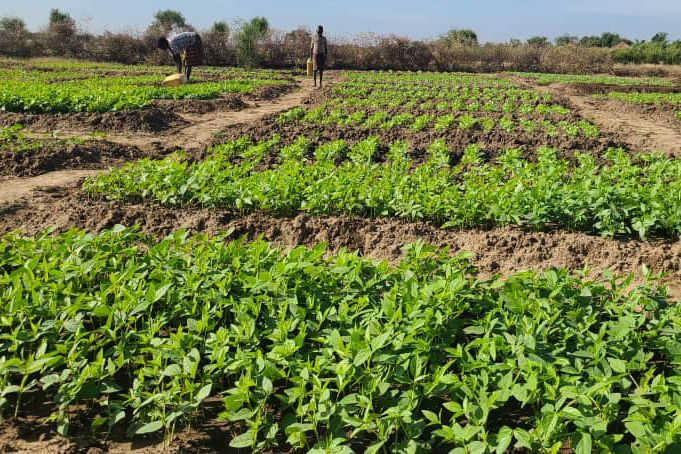
But a quiet transformation is taking root. The Grassroots Alliance for Rural Development (GARD) is working to change the narrative by swapping desperation for a hand hoe and a seed packet. In 2021, GARD launched an intervention focused on climate-smart vegetable production. Unlike traditional grains that take months to mature and are highly vulnerable to drought, vegetables like sukuma wiki (kale), tomatoes, eggplants, onions, and cabbages are ‘fast earners,’ providing a quicker, less volatile form of economic relief.
“When a mother can harvest and sell a bunch of sukuma and a basin of eggplants every week, the pressure to send her child to the city vanishes,” says Perpetua Ngorok, GARD Project Field Officer.
GARD is an independent not-for-profit organization established in 2019. They have been working to break the cycle at its source. Rather than focusing solely on rescue and repatriation—efforts that often see children return to the streets—GARD addresses the root drivers of trafficking by building economic resilience where families already live.
In partnership with the Freedom Fund, Food and Agriculture Organization, the UN Development Programme, and Uganda’s Ministry of Agriculture, over the past five years, the organization has built the capacity of 70 groups of vulnerable women and girls—reaching 700 households—in Napak. Using the climate sensitive, youth-and-women-led Farmer Field Business Schools, the approach is practical and hands-on where smallholder farmers—typically organized into groups—meet regularly in a ‘Field School/demo garden’ to learn Climate-Smart agricultural practices alongside business, financial literacy, and market access skills.
Through farmer field schools and watershed management initiatives, families learn climate-smart agricultural techniques suited to Karamoja’s harsh, drought-prone environment. Women receive farming inputs—seeds, tools, poultry and training in sustainable vegetable growing that allows them to feed their families and generate income.
“I am very happy that GARD isn’t just handing out seeds,” noted Joseph Kinei, Lopeei Sub county Administrative Secretary. “They are building local expertise”.
GARD also supports Village Savings and Loan Associations (VSLAs), particularly those involving young survivors of trafficking and those affected by child marriage. When families can grow food through drought periods and save money through village savings groups, these groups provide a safety net that families can draw on during lean seasons, a buffer against the desperation that traffickers tend to exploit.
For families who once saw no alternative to sending children away or marrying them off, a productive vegetable garden represents something profound. “Families want to keep their children safe,” said Napak community elder. “They simply need a way to survive without sending them away”. Through vegetable growing and livelihood support, GARD is helping provide exactly that.
The results in Napak are becoming visible. In villages where GARD is active, the “pull” of the city is weakening. Parents who earn from vegetable sales are more likely to keep their children in school. Also, the VSLA groups created by GARD serves a dual purpose. They are not just Farmer Field Schools, they are child protection networks. When a woman in the group is struggling, the other members step in with support before she feels forced to resort to “distress migration” for her children. The organization also integrates awareness raising about child marriage and child trafficking into its community engagement and into the involvement of husbands, helping shift cultural perceptions that have sometimes viewed child migration as normal.
“Ever since GARD introduce vegetable growing, the garden has become our daily bank account that keeps the family together,” said Martin Loli, the Local Council Chairperson in Lotuttuwa.
Despite these gains, the challenge remains immense. Climate change continues to threaten already fragile livelihoods, and official systems of child protection are weak. The work of GARD in Karamoja region proves that resilience is homegrown and offers a replicable model for communities facing similar pressures across the region. By empowering women and youth to nurture and replenish the soil, GARD is ensuring that the next generation of Karamoja’s children stays exactly where they belong: at home, in school, and safe from exploitation.