
Nepal is in the midst of a political shake-up, with a young, anti-establishment party surging in the country’s latest parliamentary elections and signaling a generational shift in leadership for the first time in decades. But far from the capital and the national spotlight, change is already unfolding in quieter ways.
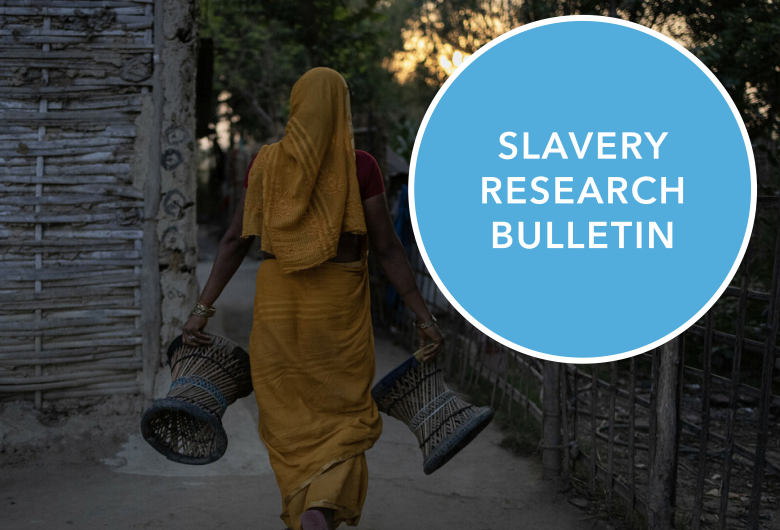
There, forty-year-old Maya speaks confidently with customers in her small shop, its shelves lined with salt, spices and single-use packets of soap. She started the business with the equivalent of $129 and business literacy training, and within months had doubled her profits. In doing so, she became a primary decision-maker in her household, where she previously had no financial voice. In a community where her family worked to pay off inherited debts, Maya is now a business owner.
Maya is part of the Harawa-Charawa community in Nepal’s Madhesh Province. For generations, many families were trapped in bonded labor, forced to work off loans that could never realistically be repaid. In 2022, a landmark government ruling formally outlawed the practice and recognized their freedom. Legal liberation, however, did not erase landlessness, poverty or the legacy of debt.
Maya grew up without formal schooling. In her experience, “credit” meant coercion. Loans were tools that bound families to landowners for decades. When outside groups began discussing small seed grants to help women start microenterprises there was skepticism. Money had rarely meant opportunity.
What changed was not the size of the grant. It was the relationship behind it.
For more than a decade, local organizations had worked alongside the Harawa-Charawa community. They supported families in getting children into school, campaigned for government recognition of bonded labor, provided legal advocacy and helped people claim basic rights and public benefits. This consistent presence built trust long before any financial program began.
So when a livelihoods initiative offered small amounts of start-up capital, approximately $129, paired with business literacy training, women like Maya were willing to consider it. They knew the people involved. The idea of a revolving fund was discussed within the community. It did not feel like a trap.
Maya’s cohort was offered three paths for their seed capital: livestock farming, commercial agriculture or retail trade. Livestock is often the default choice in rural aid programs, but it’s risky: animals can die from disease and there’s often a long wait for a seasonal harvest to turn a profit. Maya chose to open a kirana, a small retail shop which offered immediate, daily cash flow. She moved from being a survivor of a system to a woman managing a supply chain and finding a voice that the decades of bonded labour had tried to silence.
Her experience is part of a larger story. A forthcoming evaluation from the Freedom Fund’s Livelihood Technical Assistance Project, which supported 708 women in the community, reports measurable results. Food insecurity dropped by 96%, effectively ending the routine skipping of meals. Self-employment increased fivefold. Women moved from the grinding uncertainty of daily wage labour to the autonomy of running their own businesses, leading to a 39% surge in average monthly household income, more impressive still considering seventy-five percent of the women in the program were illiterate. The evaluation also found a 52% increase in women’s influence over household decision-making: a seismic shift in power for a disenfranchised community.
The program was not without setbacks. Livelihoods tied to land and livestock face climate shocks, disease and animal mortality. Yet, because the program encouraged diversification into retail and crops, a single disaster did not equal a total economic collapse.
There are an estimated 126,000 Harawa-Charawa in Nepal. Their story reflects both deep injustice and sustained resilience. Many adults were denied education. Hunger was common. Yet the community fought for decades to get their children into school, to force government recognition of bonded labour, and to receive their basic rights and government entitlements.
As international aid budgets contract sharply in 2026, governments and donors are under pressure to fund programs that are faster, cheaper and easier to measure. Small cash grants and microenterprise programs are often promoted as efficient solutions.
However, our work in Nepal suggests that this push for efficiency risks overlooking a harder truth: low-cost financial interventions are most effective when they are built on years of sustained trust. At the heart of this is what we call the “trust premium.”
In communities shaped by exploitation, capital alone is not neutral. Without trust, even a modest loan can look like another form of control. The most effective results in Nepal did not come from technology or rapid response. They came from years of consistent engagement with local, trusted partners that made women willing to take a calculated risk.
If funding becomes shorter and more transactional, programs may produce impressive short-term numbers but fail to create lasting change and durable economic security, particularly for women emerging from systems of exploitation. Trust cannot be built within a single grant cycle. It requires time, local partnership and reliability.
Maya’s shop did not begin with a large investment. It began with $129, business literacy training and the confidence that this time, the offer was genuine. As aid budgets shrink, the trust premium may be the most valuable investment of all.
Photo: Eva Jew/The Freedom Fund