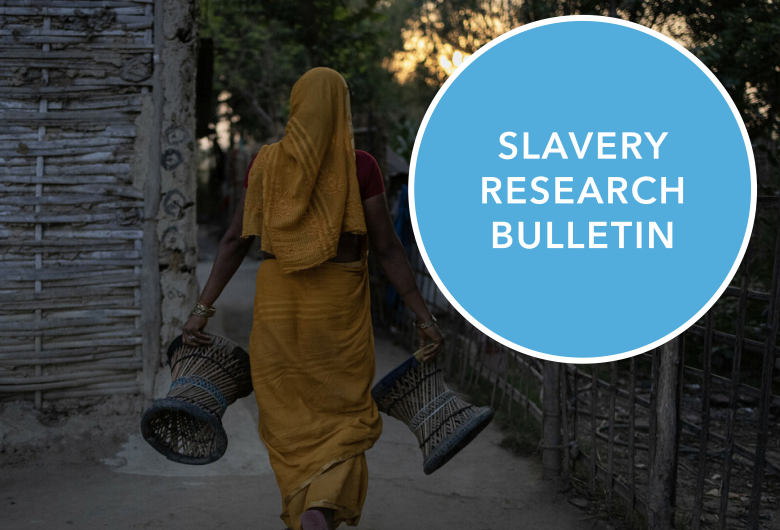

An evaluation of the Livelihood Technical Assistance Project for the formerly bonded Harawa-Charawa community in Nepal
In the Madhesh Province of Nepal, members of the Harawa-Charawa community face ongoing marginalisation and economic insecurity following generations trapped in agricultural bonded labour, with harmful gender norms compounding challenges for women and girls (Freedom Fund, 2022; Cannon and Oosterhoff, 2021;Dhakal, Karki and Shrestha, 2020). The Livelihood Technical Assistance Project (LTAP) aimed to improve the economic resilience of the Harawa-Charawa community by supporting engagement in income-generating activities (IGAs) such as farming and livestock rearing. The project supported 708 women and 33 men from 52 community groups in Dhanusha, Saptari and Siraha districts through capacity-building training and the distribution of seed money from a revolving fund – a pool of money used to provide small loans to community group members to invest in IGAs, with funds subsequently redistributed to other group members following loan repayment.
The LTAP was implemented by ActionAid Nepal from September 2023 to July 2025 with support from Community Improvement Centre, Dalit Jankalyan Yuba Club Lahan, Janachetana Dalit Sangam and Shripurraj Community Development Center, and funding from the Norwegian Agency for Development Cooperation. The project evaluation was commissioned by the Freedom Fund. It used a mixed-method longitudinal approach, drawing on a baseline (February 2024) and midline (November 2024) survey conducted by ActionAid Nepal, and an endline (May 2025) survey conducted by BB Research and Consulting Services to measure changes in household economic and social conditions.
Key findings
Increased household income and self-employment
The project enabled participants to become less reliant on wage labour through investment in IGAs. The number of survey respondents who ran their own business increased by nearly 400%, from 17% at baseline to 80% at endline. While some respondents continued to work for others in addition to running their own business, nearly half of all respondents became fully self-employed, compared to just 15% at baseline. This shift was accompanied by a significant increase in average monthly household income of USD 50 – a nearly 40% rise from baseline to endline.
Improved land access and food security
The project led to a remarkable 96% reduction in food insecurity, which had affected nearly half of all survey respondents at the baseline (n=50) and just two respondents at the endline. Participants’ access to land also increased by 17% over the course of the project. Although not directly facilitated by the LTAP, greater land access was seen as an indirect benefit enabled through improved financial status, community engagement and capacity-building activities that improved participants’ understanding of land tenure and rights.
Positive shift in women’s agency and inclusion
The project led to promising improvements in women’s decision-making and participation in economic activities, with women taking more active roles in business decisions. At the endline, 90% of women perceived themselves to be economically active in their household, compared to 41% at baseline, and the number of women either equally or more involved than men in household decision-making increased from 22% to 33%. Despite this progress, women’s overall decision-making power remains less than men’s in Nepali society, underscoring the need for continued efforts to advance women’s economic inclusion.
Collective agency and accountability through the revolving fun
Participants reported that the revolving fund model promoted shared accountability and collective responsibility to repay loans, and 100% of survey respondents said that the revolving fund improved their livelihood. Even so, some participants felt significant pressure when their IGAs did not generate quick yields, especially when faced with challenges such as livestock deaths, climate impacts and delays in insurance payments.
Conclusion
The LTAP has enabled significant improvements in economic security for members of the Harawa-Charawa community, alongside important progress in women’s economic agency. The revolving fund and peer-to-peer training model serves as a promising approach to promote economic advancement and social cohesion for the whole community, while learning from the challenges and successes of the LTAP will be key in ensuring sustainable long-term change.
Recommendations
- Prevent loss of livestock by introducing locally-adapted breeds in consultation with experts and engage successful farmers and veterinarians to provide training and livestock services.
- Mitigate climate impacts and maximise preparedness by providing training in climate-resilient techniques, conservation techniques and resource management.
- Improve access to insurance coverage, awareness and service quality by coordinating with service providers early, gathering farmer feedback and conducting community outreach.
- Strengthen revolving fund management by allowing sufficient time to establish revolving funds, including the development and clear communication of detailed selection criteria, rotational plans, and IGA-specific repayment plans that account for variations in time taken to generate yields.
- Address gaps in knowledge and market access by strengthening training and technical support, including developing tailored, sector-specific materials and providing increased supervision and refresher sessions for peer trainers.